Introduction: Supporting Decarbonisation in the Commercial Sector
Heating continues to be a significant contributor to carbon emissions, accounting for around 22% of total UK emissions. As environmental regulations tighten, it is more important than ever for commercial buildings to opt for low-carbon solutions as opposed to traditional heating systems, as expectations around sustainability increase and the UK commercial sector hits a crucial phase in its transition towards Net Zero.
Even though fully electrified systems such as standalone heat pumps are seen as the best low-carbon solution, hybrid heating systems have emerged as a transitional and sometimes practical solution which allows older commercial buildings with infrastructure, space or fabric limitations to reduce emissions and avoid the complexities and costs involved with a full retrofit, while not compromising on performance.
Why Change is Necessary
Gas is heavily relied upon in the UK commercial sector, particularly for space and water heating, making decarbonisation a critical step towards the UK’s Net Zero strategy. Due to its environmental impact, customers, investors, and regulators are becoming more judgemental to a business’s approach to sustainability.
Hybrid heating proves to be a suitable alternative to gas due to its flexibility and reliability when it comes in the UK climate. Low-carbon alternatives need to be able to cope with fluctuations in temperature without compromising on performance and hybrid heating can match this expectation while reducing fossil fuels.
What is a Commercial Hybrid Heating System?
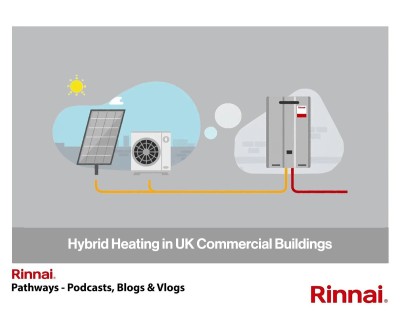
Typically, a hybrid heating system consists of an air source heat pump and a gas fired appliance, combining two or more heat sources which focus on reducing carbon and high efficiency.
The heat pump would usually provide much of the annual heat demand, in most installations and the gas boiler or gas water heater providing the top up heat during colder periods or when high flow temperatures are required. This approach allows businesses to significantly reduce gas consumption while making use of existing infrastructure.
Hybrid systems are becoming more prominent in the UK commercial HVAC market, which continues to shift towards integrated, low-carbon solutions. Hybrids are especially relevant in hard to decarbonise buildings.
How Hybrid Heating Works in Practice
A hybrid system’s control strategy is crucial to its effectiveness when heating and should continuously monitor factors such as:
- Internal and external temperatures
- Heating demand
- Electricity and gas prices
- System efficiency and performance
Based on these inputs, the controller automatically selects the most efficient and cost-effective heat source at any given time. In typical UK conditions, the heat pump can supply up to 70–80% of annual heat demand, with the boiler only operating when necessary.
Many systems also incorporate weather compensation and predictive controls, allowing them to anticipate changes in demand and further optimise energy use.
For water heating the heat pump often provides the base load heat and the water heaters top up the heat when required. This means that gas is only used when the heat pump cannot make up the full heat requirement.
Key System Components
A commercial hybrid heating system typically includes:
- Air Source Heat Pump (ASHP): Provides low-carbon, high-efficiency heat by extracting energy from the ambient air.
- Gas Boiler or Water Heater: Acts as a supplementary or backup heat source for peak loads and extreme conditions.
- Intelligent Control Unit: Optimises system performance and manages switching between heat sources.
- Buffer or Thermal Store: For water storage and distribution.
- Heat Distribution System: Often radiators.
This configuration allows for flexibility and makes hybrid systems particularly suitable for retrofit projects.
Cost Savings and Operational Efficiency
Hybrid heating systems can help save on operational costs and this is one of biggest benefits of opting for this type of heating system. Heat pumps can deliver three to five units of heat for every unit of electricity consumed, making them significantly more efficient than gas boilers.
Hybrid systems that maximise heat pump use and minimise gas boiler use can reduce heating costs by up to 20% compared to gas only systems. With the addition of advanced controls, the system can operate in the most economical mode, even with fluctuating energy prices.
For energy-intensive commercial buildings, these savings can be substantial and recurring.
Retrofitting Commercial Buildings
Fabric First Considerations
Before installing a hybrid system, it is essential to assess the building’s thermal performance. Improvements such as insulation upgrades, draught-proofing, and glazing enhancements reduce heat demand and maximise system efficiency. A “fabric first” approach ensures the heating system is correctly sized and operates optimally.
Integration with Existing Systems
One of the major advantages of hybrid heating is its compatibility with existing infrastructure. In many cases, current pipework and radiators can be retained, reducing disruption and installation costs. While heat pumps favour lower flow temperatures, many commercial systems can be adapted to work effectively with conventional emitters.
Electrical Capacity
Heat pumps increase electrical demand, so an assessment of site electrical capacity is essential. Some buildings may require upgrades to incoming supplies or distribution boards. Early evaluation helps avoid delays and ensures safe, reliable operation.
Phased Decarbonisation
Hybrid heating supports a phased approach to decarbonisation. Businesses can install a heat pump alongside an existing boiler, reducing emissions immediately while spreading investment over time. This makes hybrid systems particularly attractive for businesses looking for a transition rather than a full system retrofit.
Sector-Specific Applications
- Healthcare and Care Homes: Hybrid systems provide reliability, resilience, and low-carbon operation, with gas backup ensuring uninterrupted heating and hot water.
- Public Sector Buildings: Schools, libraries, and council offices benefit from lower operating costs and alignment with sustainability mandates. Often within aged buildings that are hard to decarbonise.
- Heritage and Older Buildings: Hybrid heating offers a lower-impact alternative to full electrification, preserving building fabric while improving efficiency.
- Offices, Retail, and Light Industrial: Reduced energy costs, consistent comfort, and improved ESG performance support business objectives.
- District Heating and Heat Networks: Hybrid plant can support local networks by balancing low-carbon heat generation with peak load capacity.
Performance, Maintenance, and Reliability
The UK building stock in terms of practical installation requirements such as space, along with technical challenges and UK weather can all affect heat pump performance. A benefit of hybrid systems is the automatic top-up from the gas boiler or water heater which prevents a decrease in performance and ensures operational reliability.
Long-term performance depends on effective controls, monitoring, and maintenance. Many systems now include remote monitoring, enabling proactive fault detection and optimisation. Regular servicing of both the heat pump and boiler is essential to maintain efficiency and system longevity.
Environmental responsibility also extends to refrigerant choice. While lower-GWP refrigerants are increasingly used, natural refrigerants such as CO₂ and propane are gaining traction as more sustainable long-term options.
Conclusion
Hybrid heating represents a practical, efficient, and future-ready solution for UK commercial buildings. By combining the efficiency of heat pumps with the reliability of gas boilers and gas water heaters, businesses can reduce costs, cut carbon emissions, and maintain operational resilience.
With the ability to retrofit existing buildings, access financial incentives, and support phased decarbonisation strategies, hybrid systems offer a bridge between traditional heating and a fully low-carbon future. For organisations navigating the complexities of decarbonisation, hybrid heating provides a balanced pathway that delivers both environmental and economic benefits.